
User Guide: Photosynthetic Bacteria (PSB) for Keeping Medaka Fish
1. What PSB Is (and Why Medaka Keepers in Japan Use It)
Photosynthetic bacteria (PSB) is a loose, hobbyist term for beneficial bacteria—most commonly Rhodopseudomonas palustris and related purple non‑sulfur bacteria—cultured in water and exposed to light. In Japanese medaka keeping, PSB is valued as a microbial helper rather than a magic potion. It supports water stability, assists in breaking down organic waste, and can serve as a supplemental live food for fry.
Think of PSB as a tiny, light‑loving cleanup crew that also happens to be nutritious.
2. Expected Benefits (Realistic, Not Mythical)
· Improves overall water clarity over time by competing with nuisance microbes
· Helps reduce odor and excess organic buildup
· Provides micro‑nutrition for fry and grazing fish
· Supports biofilm health in tubs, bowls, and outdoor containers
PSB does not replace filtration, water changes, or good stocking practices. It works best as part of a balanced system.
3. Forms of PSB Commonly Used
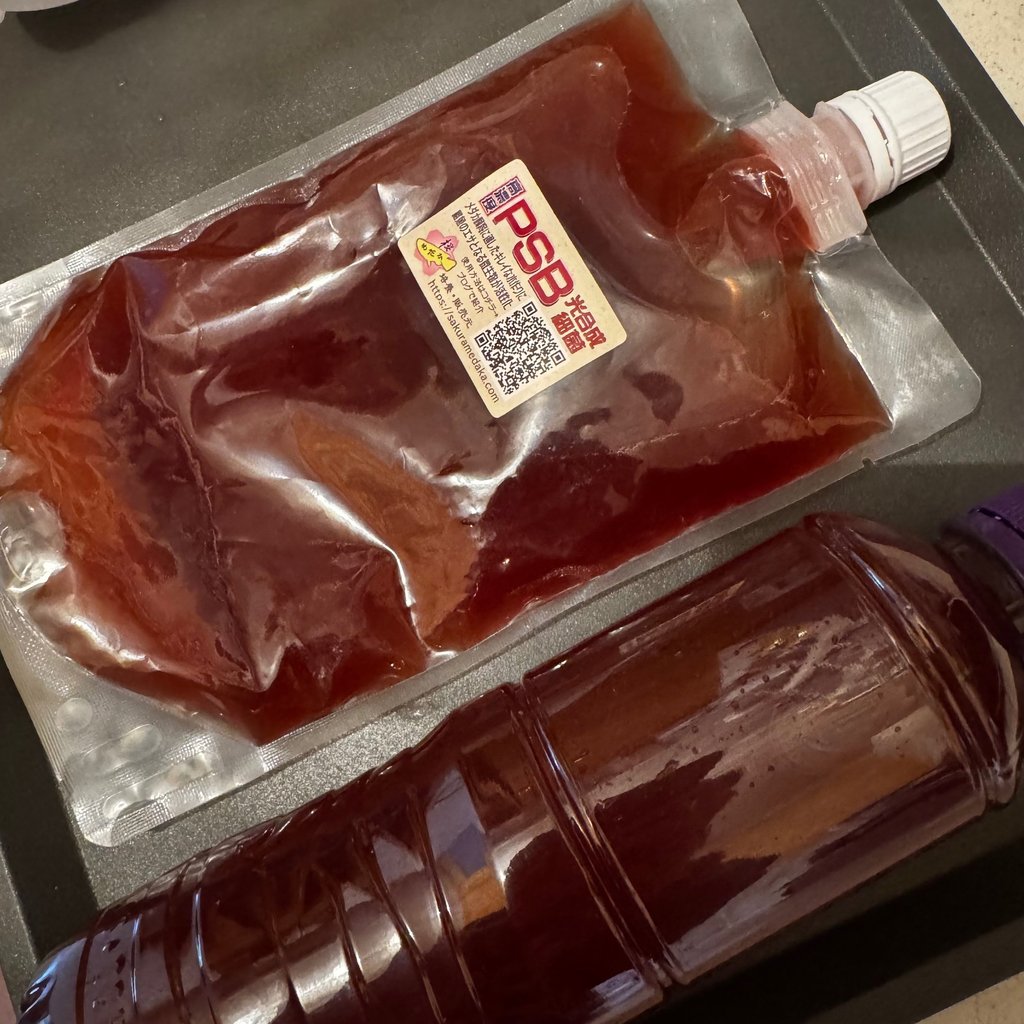
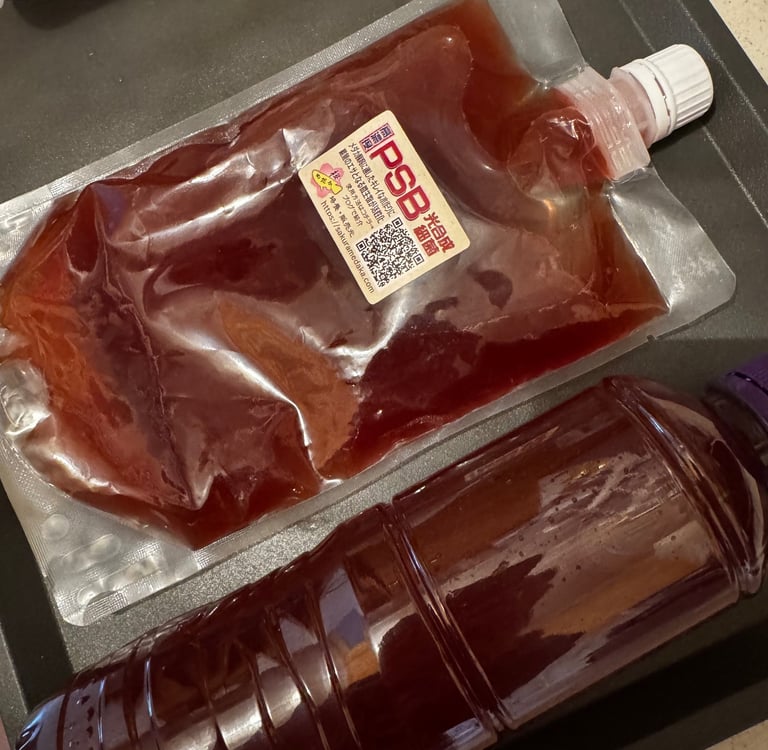
· Liquid culture (reddish‑purple): Most common in Japan; ready to dose
· Homemade cultures: Grown in bottles with light; variable strength
· Commercial bottled PSB: More consistent, higher reliability
For beginners, commercial liquid PSB is strongly recommended.
4. Suitable Setups for Medaka
PSB is traditionally used in: - Outdoor tubs and bowls (very common in Japan) - Indoor unfiltered or lightly filtered tanks - Green water systems
It performs best where light is available, as the bacteria are photosynthetic.
5. How to Use PSB
Standard Dosage (General Guide)
· Maintenance: 1–2 ml PSB per 10 liters of water, once per week
· New setup: Same dose, added after dechlorination
· Outdoor tubs: Dose lightly; sunlight increases activity
Always shake the bottle before use.
Fry Rearing
· Add a very small amount (a few drops per 10 liters)
· PSB acts as both water conditioner and supplemental live food
· Avoid overdosing; water should tint slightly, not turn opaque
6. Timing and Light
· Dose during daytime when light is available
· Sunlight or bright ambient light improves effectiveness
· Avoid dosing immediately before a full blackout period
PSB is most active when it can photosynthesize.
7. Water Changes and PSB
· Perform regular water changes as usual
· Re‑dose PSB after large water changes (>30%)
· Do not rely on PSB to “fix” poor water quality
Clean water comes first; bacteria come second.
8. Signs PSB Is Working
· Slight reddish or amber tint that fades over time
· Reduced surface scum and odor
· Stable behavior and appetite in medaka
If water turns cloudy gray or smells sour, reduce dosing.
9. Storage and Shelf Life
· Store PSB tightly sealed
· Keep away from extreme heat or freezing
· Refrigeration is optional but extends life
· Use within 6–12 months for best results
Discard if the smell becomes rotten or sulfur‑like.
10. Common Mistakes
· Overdosing (more is not better)
· Using PSB in total darkness
· Treating PSB as a substitute for filtration
· Mixing with strong chemical treatments
PSB is gentle biology, not industrial chemistry.
11. Safety Notes
· Safe for medaka, shrimp, snails, and plants when used correctly
· Not harmful to humans but not for consumption
· Wash hands after handling cultures
12. Final Perspective
In Japan, PSB is part of a philosophy: work with microbes, light, and patience. Medaka thrive not because of any single additive, but because their keepers respect the slow intelligence of living systems.
Use PSB as a quiet assistant, not a miracle cure, and your medaka will reward you with color, vigor, and calm water.
Appendix A: DIY PSB Culture
A.1. Should You Culture PSB Yourself?
DIY PSB culturing is common among experienced Japanese hobbyists, especially for outdoor medaka tubs. It is economical and educational, but less consistent than commercial products. Beginners are encouraged to gain experience with bottled PSB first.
Homemade PSB can fail quietly or go very wrong very fast. This appendix exists to help you fail safely.
A.2. What You Need
· Clear plastic bottle (1–2 liters)
· Chlorinated water (straight from the tap)
· Starter PSB culture (commercial PSB or a successful previous batch)
· Simple carbon source: a few grains of uncooked rice or Ebios or brewers yeast
· Bright light source or direct sunlight
Do not sterilize obsessively; cleanliness matters, but PSB thrives in ordinary conditions.
A.3. Basic Culture Method
1. Add starter PSB (about 25%of the final volume minimum).
2. Fill the bottle with chlorinated water, carefully squeeze the bottle whilst tightening the lid thereby leaving no air bubbles or gap
3. Add the fertiliser / Ebios / brewers yeast
4. Place in strong indirect sunlight or under a bright lamp.
Within 3–7 days, the water should turn pink, red, or purple.
A.4. Light and Temperature
· Ideal temperature: 20–35°C (68–95°F)
· Strong light is essential; darkness favors the wrong microbes
· Avoid overheating in sealed bottles under intense sun
PSB is photosynthetic but not immortal. Cook it, and it dies.
A.5. How to Tell Success from Failure
Healthy culture: - Reddish, purple, or wine-colored - Mild, earthy or neutral smell - No fuzzy growth or surface mold
Failed culture (discard immediately): - Gray, milky, or green - Strong rotten egg or sewage smell - Visible slime, foam, or mold
When in doubt, throw it out.
A.6. Storage and Reuse
· Keep sealed, away from heat extremes
· Refresh cultures monthly by splitting into new bottles
· Do not store failed cultures indoors
Appendix B: Seasonal Notes for Medaka Keepers (as inspired by the Japanese)
Spring
· Ideal season for PSB use
· Gradually increase dosing as temperatures rise
· Excellent time to start new cultures
Summer
· PSB activity is very high
· Dose lightly; sunlight multiplies effects
· Watch for overheating in culture bottles and tubs
· Early morning dosing is safest
Autumn
· Reduce dosing frequency
· PSB helps stabilize falling temperatures
· Stop starting new cultures late in the season
Winter
· Outdoor tubs: usually stop PSB entirely
· Indoor tanks: minimal use only if light and temperature are stable
· Cold slows PSB metabolism; overdosing risks oxygen depletion
Appendix C: PSB Quick Reference
What PSB Does
Supports microbial balance, helps break down organic waste, and provides supplemental nutrition—especially useful in outdoor tubs and fry systems.
What PSB Does NOT Do
It does not replace filtration, water changes, aeration, or good stocking practices.
When to Use PSB
- Outdoor tubs with sunlight
- Lightly stocked or unfiltered setups
- Fry rearing (very small doses)
When NOT to Use PSB
- In total darkness
- During active fish distress
- As a “fix” for neglected water quality
Basic Dosing Rule
Start small. Half dose is safer than full dose. Observe for 24 hours.
Visual Clues
- Pink/red tint = normal
- Gray/milky = stop dosing
- Green = algae dominance
Golden Rule
Clean water first. Biology second.
Appendix D: Comparison — PSB vs. Green Water vs. EM Bacteria
PSB (Photosynthetic Bacteria)
· Light-dependent, purple/red bacteria
· Works slowly and gently
· Best for stability and subtle improvement
Strengths: odor control, microbial balance, fry nutrition
Weaknesses: overdosing risk, needs light
Green Water (Phytoplankton)
· Free-floating algae
· Extremely common in Japanese outdoor medaka tubs
Strengths: excellent fry food, oxygen production, natural shading
Weaknesses: unstable, can crash suddenly
EM Bacteria (Effective Microorganisms)
· Mixed cultures of lactic acid bacteria, yeasts, others
· Often used in ponds and soil
Strengths: rapid organic breakdown
Weaknesses: unpredictable in aquaria, easy to overdose
Practical Guidance
· Mature green water systems often do not need PSB
· PSB pairs well with clear-water tub setups
· EM bacteria should be used cautiously and sparingly with medaka
In Japanese practice, the best additive is often nothing at all—once a system has found its balance.
Appendix E: A Medaka-First Philosophy (Why This All Works)
Japanese medaka keeping is less about control and more about alignment. The fish, the microbes, the sunlight, and the seasons are treated as collaborators rather than problems to be solved.
Medaka evolved in shallow, plant-filled waters with fluctuating conditions. They are resilient not because the environment is sterile, but because it is alive. Outdoor tubs, green water, biofilm, and gentle bacterial systems recreate this living complexity better than perfectly polished glass boxes.
PSB fits into this philosophy because it works quietly. It does not shock water chemistry or force rapid change. It responds to light, competes slowly, and fades when conditions are wrong. In other words, it behaves like part of an ecosystem, not a product.
This is why experienced keepers intervene less over time. As tubs mature, additives are reduced, feeding is simplified, and observation replaces action. The keeper’s role shifts from manager to caretaker.
When problems arise, the first response is not to add something new, but to ask: - Is the system overcrowded? - Is organic waste accumulating? - Has light, temperature, or season shifted?
Only after those questions are answered does PSB—or any additive—enter the picture.
The quiet lesson is this: medaka do not thrive because we optimize every variable. They thrive because we allow small, stable worlds to form around them.
PSB is merely one small voice in that world.