
Methylene Blue for Hatching Eggs
1 min read
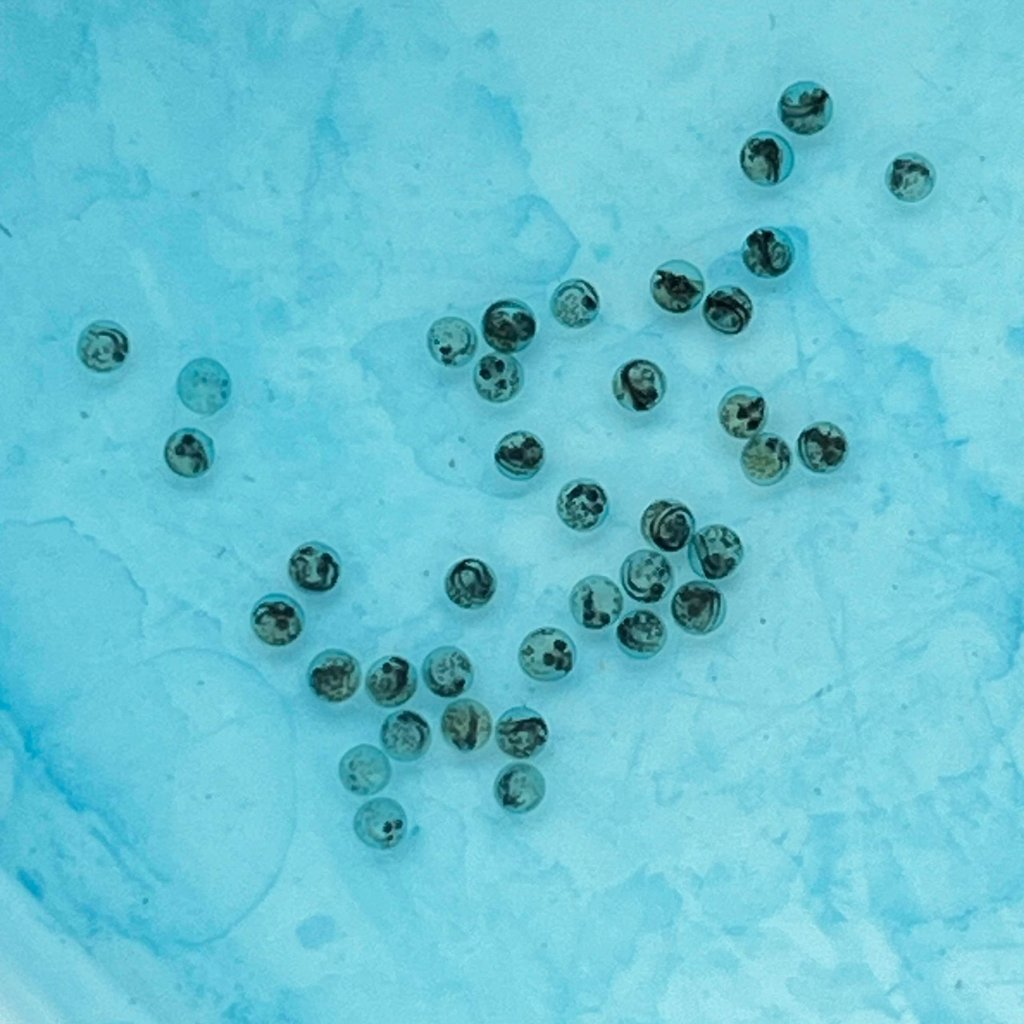
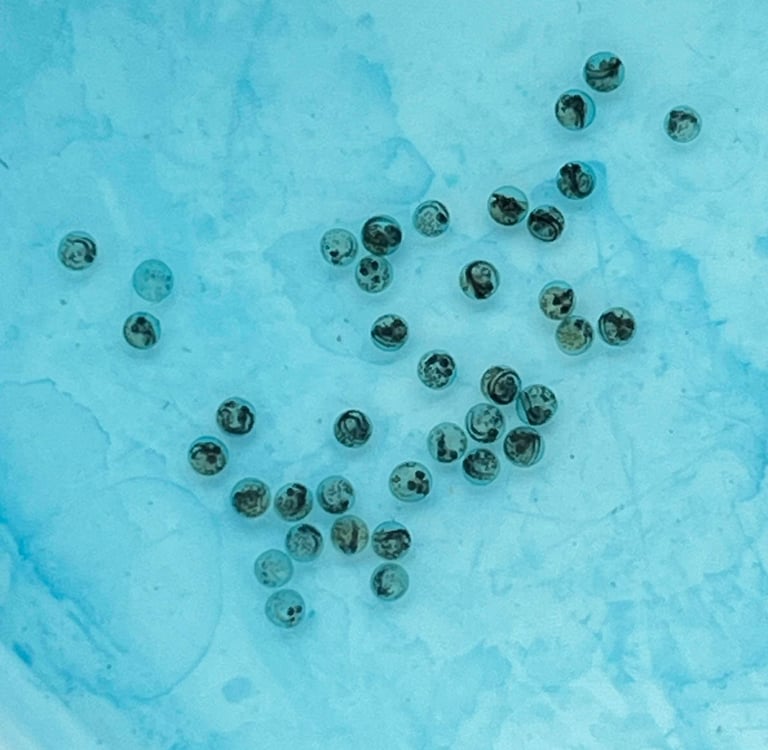
User Guide: Methylene Blue
Methylene Blue for Medaka Egg Sterilisation
In Japanese medaka breeding, attention to egg care is taken seriously. Fertilised eggs are resilient in many ways, but they are also vulnerable to fungal infection, particularly in artificial incubation setups. One commonly used tool to reduce this risk is methylene blue.
Methylene blue is a synthetic dye with antifungal and mild antibacterial properties. In aquaculture, it has long been used to suppress fungal growth on fish eggs. Fungus tends to colonise unfertilised or damaged eggs first, but once established, it can quickly spread to healthy ones. In tightly grouped egg clusters, this can lead to significant losses.
In Japan, breeders who incubate eggs separately—rather than leaving them attached to the female or in planted ponds—often use a very dilute methylene blue solution during the early incubation period. The goal is prevention, not treatment of an active outbreak. A light blue tint to the water is sufficient. Overdosing offers no advantage and may stress developing embryos.
Eggs are typically placed in clean, dechlorinated water with gentle aeration. A small measured amount of methylene blue is added to achieve a pale blue colour. Strong aeration is avoided; eggs benefit from steady oxygenation without being tumbled aggressively. Daily inspection allows removal of any opaque white eggs, which are unfertilised and prone to fungus.
Timing matters. Many breeders use methylene blue only during the earliest stages of development, reducing or replacing the treated water with fresh water as hatching approaches. Once fry hatch, they are usually transferred to clean water without medication.
It is important to understand that methylene blue is a supportive tool, not a substitute for hygiene. Clean containers, appropriate temperature, good water quality, and careful egg selection are foundational. In outdoor pond systems with natural microbial balance, some breeders avoid chemical intervention entirely and rely on ecosystem stability.
When used carefully and conservatively, methylene blue can significantly improve hatch rates in controlled breeding setups. Like many techniques in Japanese medaka keeping, its effectiveness lies not in heavy use, but in measured, thoughtful application.